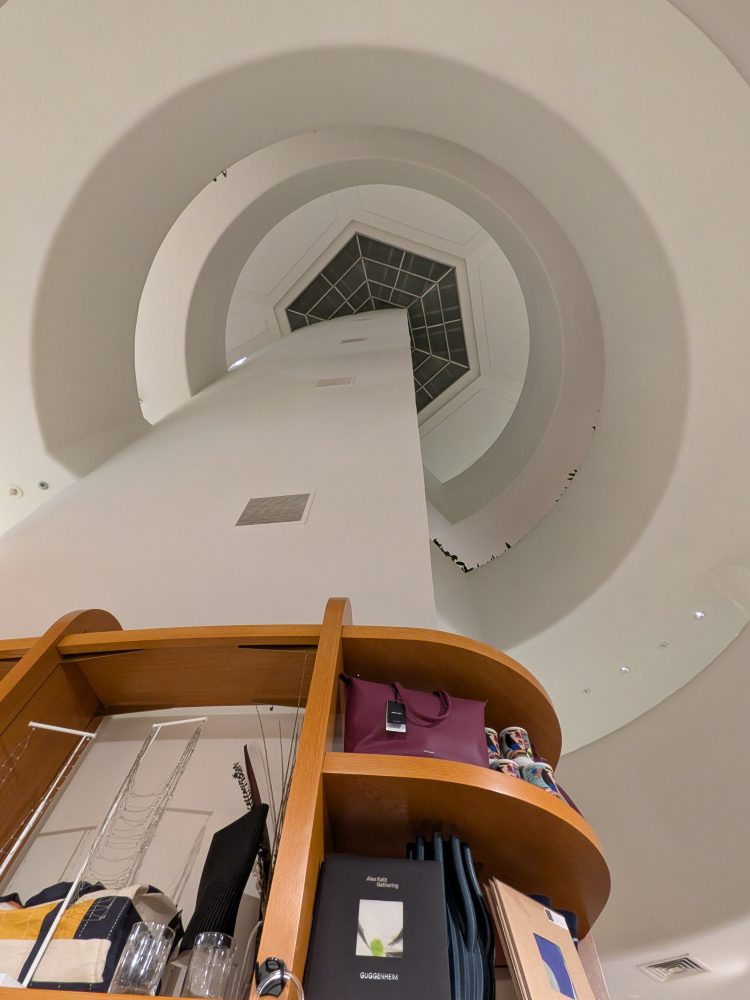
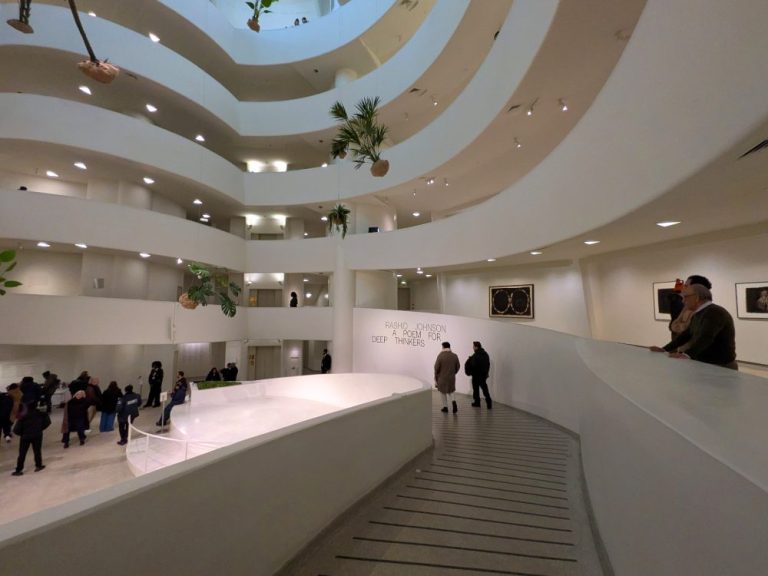
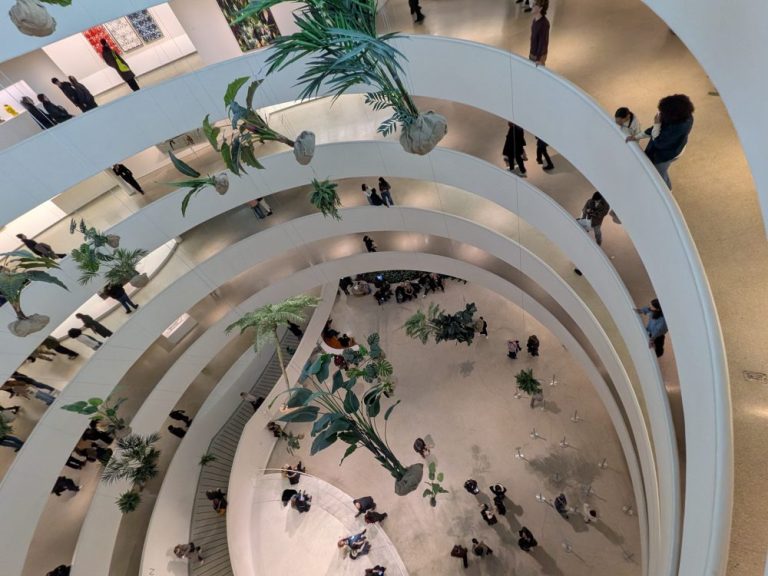
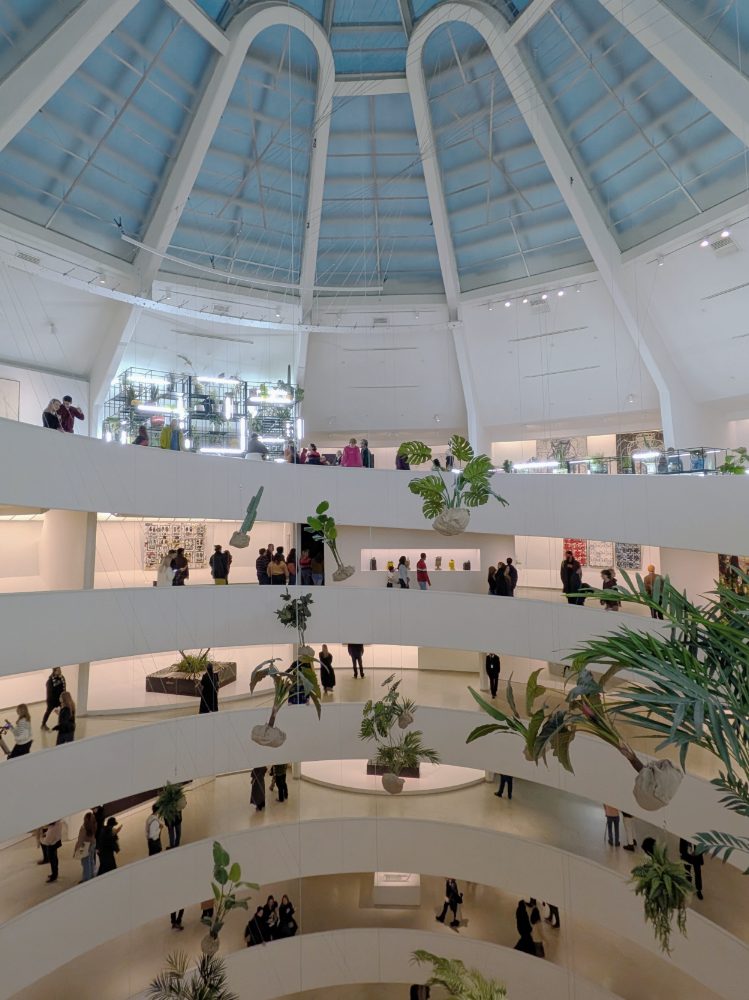
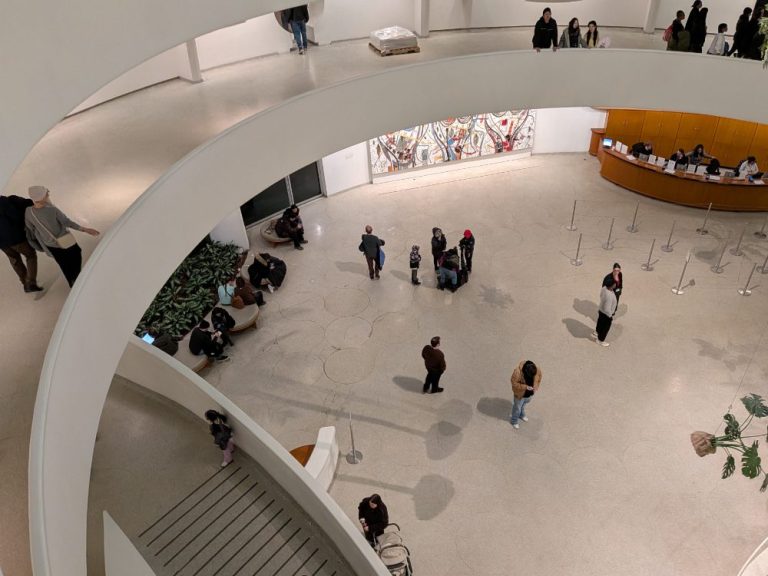
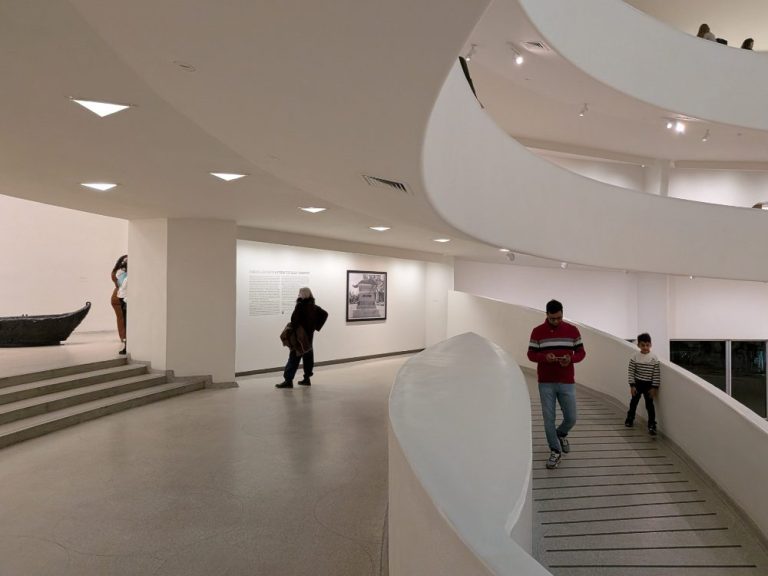
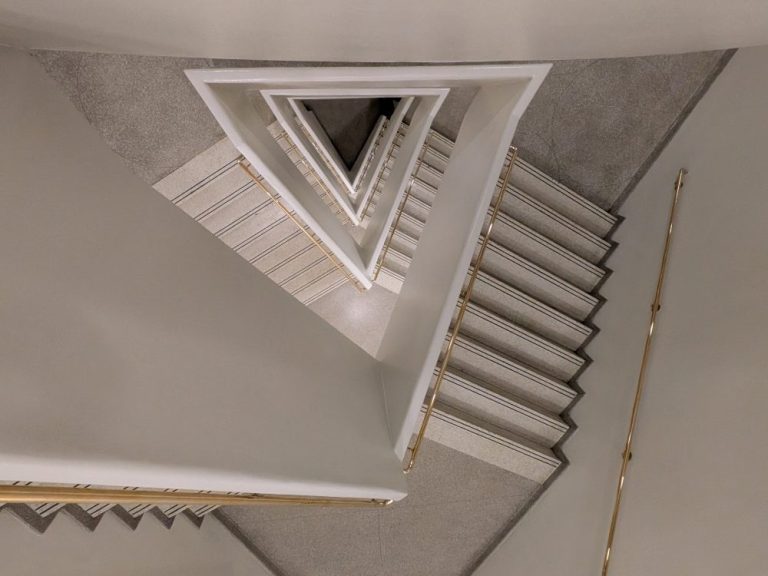
I experienced this in a rather unique way: navigating the ramp with my young daughter’s stroller. Without the interruption of flat landings, the stroller glided effortlessly, making the sense of “going round and round” through the rotunda far more visceral than a typical walk. Beyond the grand gesture of the ramp, I was struck by the quieter details: the repetitive circular floor patterns, the sharp geometry of the triangular skylights, and the dramatic void of the staircase. It is a masterclass in how small, precise moments can define a monumental space.
This layout challenges the traditional gallery experience. Do you find that this fluid, open-plan approach enhances your connection to art, or do you still prefer the quiet contemplation of a traditional partitioned space?
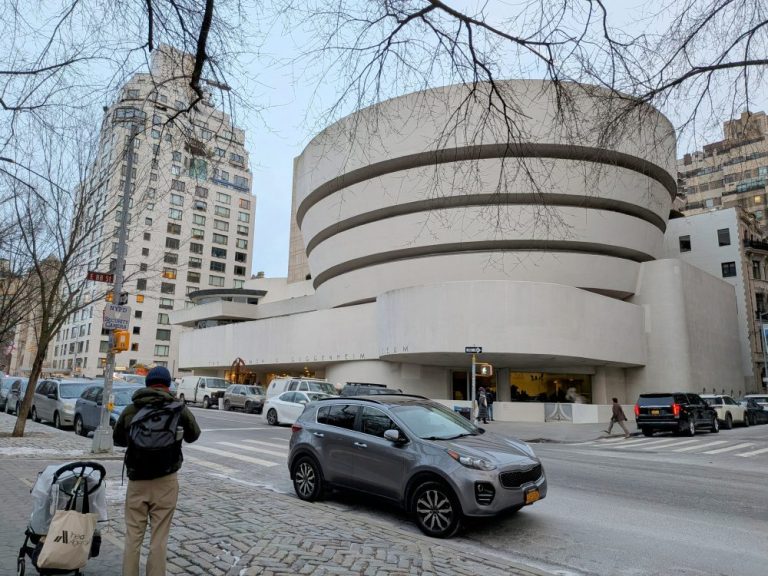
The iconic white spiral of the Solomon R. Guggenheim Museum stands as a bold, sculptural rebellion against Manhattan’s rigid grid. It is more than just a landmark; it represents a fundamental revolution in how we experience “spatial fluidity.”
By abandoning the traditional concept of partitioned galleries, Wright created a continuous narrative where art is encountered along a sweeping, windowless ramp. As the rotunda expands upward, the perspective between the viewer and the artwork shifts constantly with the building’s curvature.